
Oakdale City Directory Shelves
Oakdale has a small, carefully bounded historical directory trail rather than a verified run of household books. The directly verified Oakdale-specific directory lead is Polk's Dual City Business Directory for 1889-90, indexed by the Washington County Historical Society. It is a business-directory clue for Oakdale and nearby communities, not proof of a complete household listing. The society's name index, Minnesota Historical Society research service, plat books, and municipal files provide related leads. Use each collection for its stated purpose and preserve the year and place name attached to the result.
| Collection | Years | Where held | Access |
|---|---|---|---|
| Polk's Dual City Business Directory | 1889-90 | WCHS Name Index source inventory | Indexed business-directory lead, not a complete household run |
| Washington County history | 1881 | WCHS Name Index | 637 indexed entries for historical and biographical context |
| Northwest Publishing plat book | 1901 | WCHS Name Index | 1,856 indexed entries for land and place clues |
| Washington County plat book | 1938 | Library of Congress | County, township, village, and subdivision mapping, including East Oakdale material |
| MNHS directory or telephone search | Up to five selected years | Minnesota Historical Society | Paid one-name research request for one city |
No complete post-1901 Oakdale household or business-directory series was verified. St. Paul and Hennepin County directories can help test nearby movement, but they are cross-checks, not an Oakdale directory run.
Oakdale Township Directory Names
Place labels are part of the search. The Washington County Historical Society reports that Oakdale Township was organized in 1858. Lake Elmo split in 1926, East Oakdale detached in 1951, and the Landfall, Pine Springs, and Northdale changes followed in 1959. Parts of Northdale and East Oakdale rejoined in 1968, and Oakdale became a city in 1974. A directory-like reference may therefore use a township, village, station, or neighboring community name that does not match a current address.
- 1858: Oakdale Township was organized.
- 1926: Lake Elmo split from the township.
- 1951: East Oakdale detached.
- 1959: Landfall and Pine Springs incorporated, and Northdale formed.
- 1968: Parts of Northdale and East Oakdale rejoined.
- 1974: Oakdale became a city.
Search Oakdale Township, East Oakdale, Northdale, Lake Elmo, Bass Lake Station, Lohmanville, and Halfway House when the date calls for it. The WCHS Oakdale history supplies the chronology, while the MNHS municipal inventory holds 1960-68 incorporation and boundary material. This is geography, not a name-match shortcut: an old label still needs to be paired with a dated source and a parcel, map, or family connection.
Note: A current Oakdale mailing label does not establish the jurisdiction used by an older directory or historical index.
Oakdale WCHS Directory Leads
The WCHS Name Index contains more than 180,000 local listings across many source types. Its Oakdale-related counts show the range of leads available: 265 Oakdale death listings, 669 township births, 59 township deaths, 1,563 Polk's Dual City Business Directory listings, 2,434 biographical files, 247 deeds, and 3,993 scrapbook-index entries. The figures describe indexed listings, not unique Oakdale residents or a set of original record images.
The source inventory identifies the underlying work, which makes it possible to tell a deed lead from a cemetery, scrapbook, directory, or history entry. That distinction matters. A WCHS entry can point to a useful original source, but the index itself does not establish current residence or provide every document image.
Founded in 1934, WCHS maintains a research library and archive at the carriage house behind the Warden's House Museum. Its local collections can help with original-image requests, obituary and deed context, photograph identification, and the meaning of an older Oakdale place name. Ask for the source behind an index result rather than assuming the online listing is the whole record.
The source inventory is shown in this WCHS index reference.
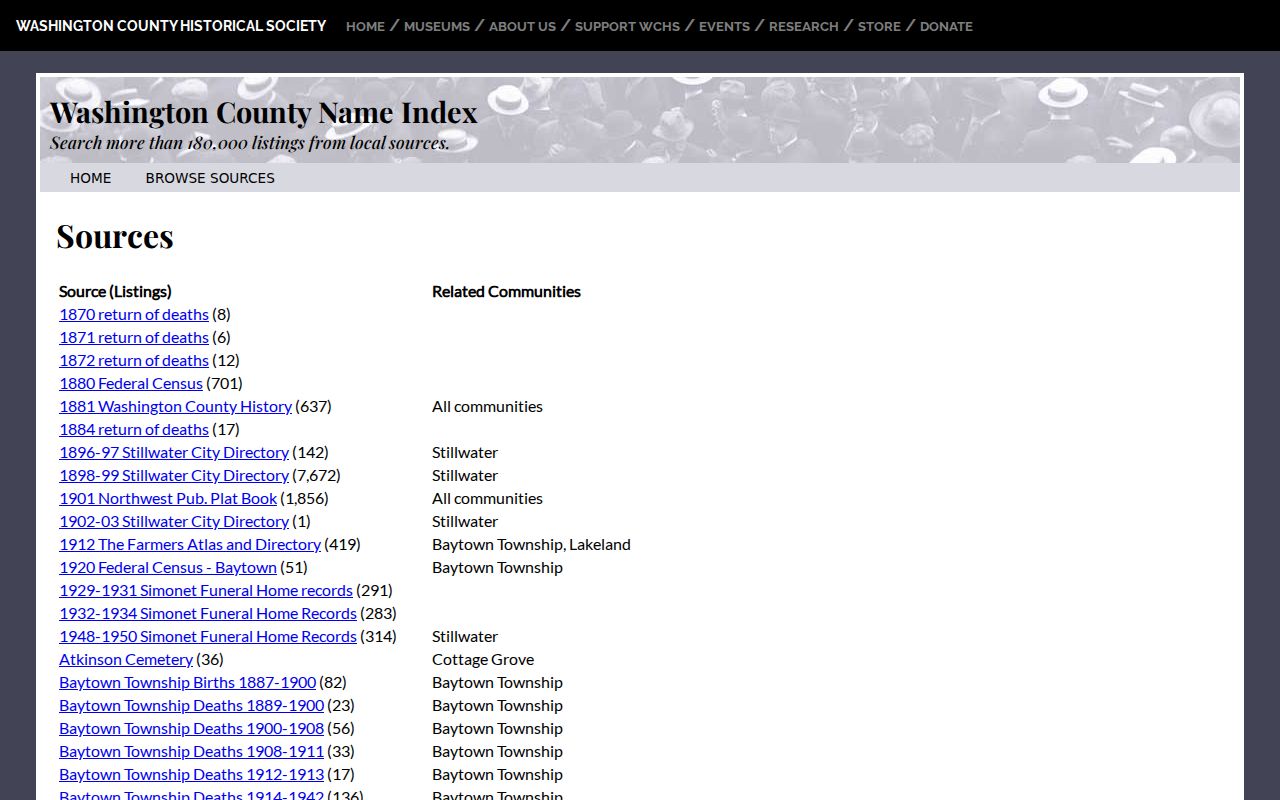
Its mix of directories, deeds, deaths, births, plat books, and scrapbooks is a reminder to record the source title with every Oakdale name hit.
Reading an Oakdale Directory Entry
Transcribe what the original volume actually shows instead of filling gaps from expectation. Historical directories often emphasize a household head and can omit minors. Women may be independently listed when single, widowed, divorced, or otherwise separately recorded. The verified Polk lead is a business directory, so its form should not be assumed to match a household directory. A full transcription makes the entry useful even when a later source uses a different spelling or place name.
Keep a distinction between an index entry and its original source. A WCHS result may show a name, location code, record note, and source title while withholding the original image. A directory transcription should therefore include the source reference and the limits of the entry, not a reconstructed biography or a claim that an unlisted person was absent.
| Name as printed | Keep initials, spelling, and any variant exactly as shown. |
|---|---|
| Year and title | Record the publication year, collection title, and whether the source is a directory, plat, index, or scrapbook. |
| Place or address | Capture a street, town, township, business location, or route only when the source supplies it. |
| Relationship or role | Note a household, business, landowner, or civic description only when printed. |
| Page or listing reference | Preserve the page, column, listing number, or WCHS source reference for a return check. |
- Criss-cross directory
- A reverse directory arranged by street and address. No complete Oakdale criss-cross run was verified, so it remains a collection-specific question.
- Householder index
- An entry arrangement that represents a household through a listed adult or named head. It is not a count of every person at the address.
- Abbreviation key
- The publisher's explanation of its shorthand. If a volume has one, copy it with the entry before interpreting a mark.
Note: A household entry can be a valuable dated lead even when another family member is not listed.
Requesting Oakdale City Directory Searches
The Minnesota Historical Society research service can search city directories and telephone books when a known name and time period are available. Its City Directory Search Request covers one individual or business in as many as five years for one city. Supply the name, city or town, selected years, and any added facts that distinguish the person. The form lets a requester choose directory, telephone book, or both.
A directory search costs $10, a telephone-book search costs $10, and both cost $20. Each price includes a $5 nonrefundable processing component. Email delivery or scanning is included. The stated usual turnaround is three to four weeks, with up to 12 weeks possible. If a name is absent, the response may identify the page where it would have appeared. That result is still bounded by what was published and what the selected city collection contains.
Regional St. Paul directories from 1856-1922 and Hennepin County directories from 1859-1983 are available as cross-checks through MNHS-linked resources. They can reveal a nearby move, but calling either collection an Oakdale run would overstate the evidence.
Tracing Oakdale City Directory Households
Build a dated sequence rather than trying to turn one result into a lifetime record. Start with a name, spelling variant, and historical place label. Then put the directory or index lead alongside census, plat, deed, cemetery, obituary, or newspaper evidence from the same period. The Washington County Library genealogy resources can route researchers to databases and newspaper collections; the Oakdale branch is at 1010 Heron Avenue North, while microfilm equipment is at Woodbury and Stillwater locations.
- Choose a year and search the WCHS index by the name and relevant historic Oakdale label.
- Open the source inventory to identify whether the lead is a directory, birth, death, deed, plat, or scrapbook reference.
- Record the printed name, place, date, and page or listing reference without normalizing it away.
- Pair the dated lead with the nearest federal census and test whether the household, age range, or land description fits.
- Use a WCHS or MNHS original-page request when the index cannot answer the question.
A disappearance can mean a move, death, different spelling, changed jurisdiction, or simple nonpublication. For a modern address chain, use the Street Directory instead of treating a historic collection as a current occupancy record.
Oakdale Directory Map Companions
Directory results gain context when they are set beside a dated map or municipal file. The 1938 Library of Congress Washington County plat book includes township, city, village, and subdivision plats, a county index, and an East Oakdale Township insert attached to the title verso. Landowner and real-property headings can help connect a historical name to an earlier parcel, but a plat is a dated land record, not proof of ongoing residence.
The MNHS Oakdale records inventory adds incorporation papers, boundary proceedings with Lake Elmo, I-94 Corridor Committee material from 1970-77, newsletters from 1973-85, and recreation material from 1974-86. Those files can place a person in a civic event or municipal discussion. They do not function as a modern residents list. No Oakdale-specific Sanborn sheet was verified, so nearby city maps should not be relabeled as Oakdale evidence.
The WCHS historical chronology is available through the Oakdale history collection.
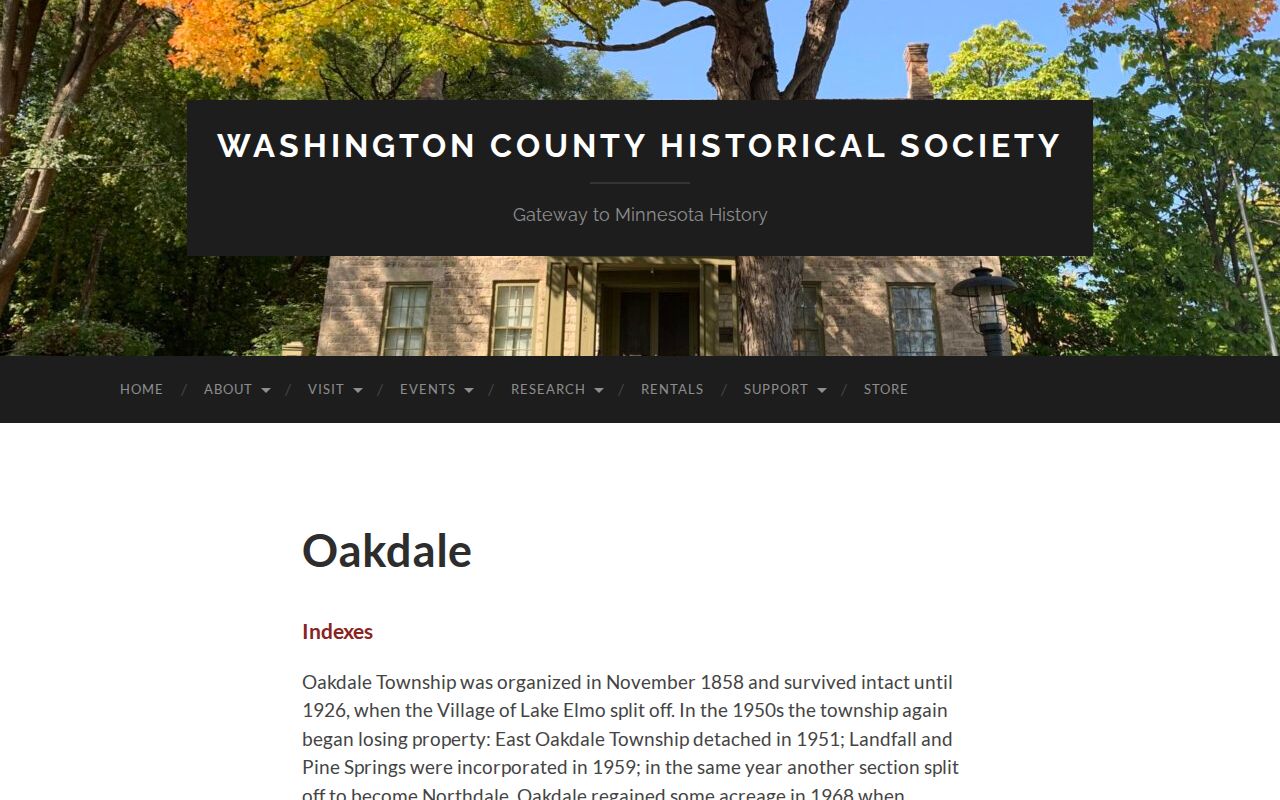
Use the historical society's chronology to choose the place name that fits the date of a city-directory lead.
Oakdale Directory Access Limits
Digitized directory portals are useful entry points, but a search screen does not prove a complete Oakdale collection behind it. The regional digitized Minnesota directory collection is a starting place for collection discovery and nearby-city cross-checks. Verify the city, year, publisher, and image availability before treating a hit as Oakdale evidence. When the date matters, a targeted WCHS or MNHS request is more reliable than guessing from a regional shelf.
Use a simple research note for every result: the search spelling, historical place label, collection title, year, page or listing reference, and access date. That record makes it possible to revisit a changing index and to distinguish a negative search from a collection that never covered Oakdale.
The digitized collection landing screen appears here.
The screen supports collection discovery, while the WCHS source inventory identifies the only directly verified Oakdale-specific directory run located in the research.
Note: An index hit, a business listing, and a map label are separate kinds of evidence and should remain separately cited.